

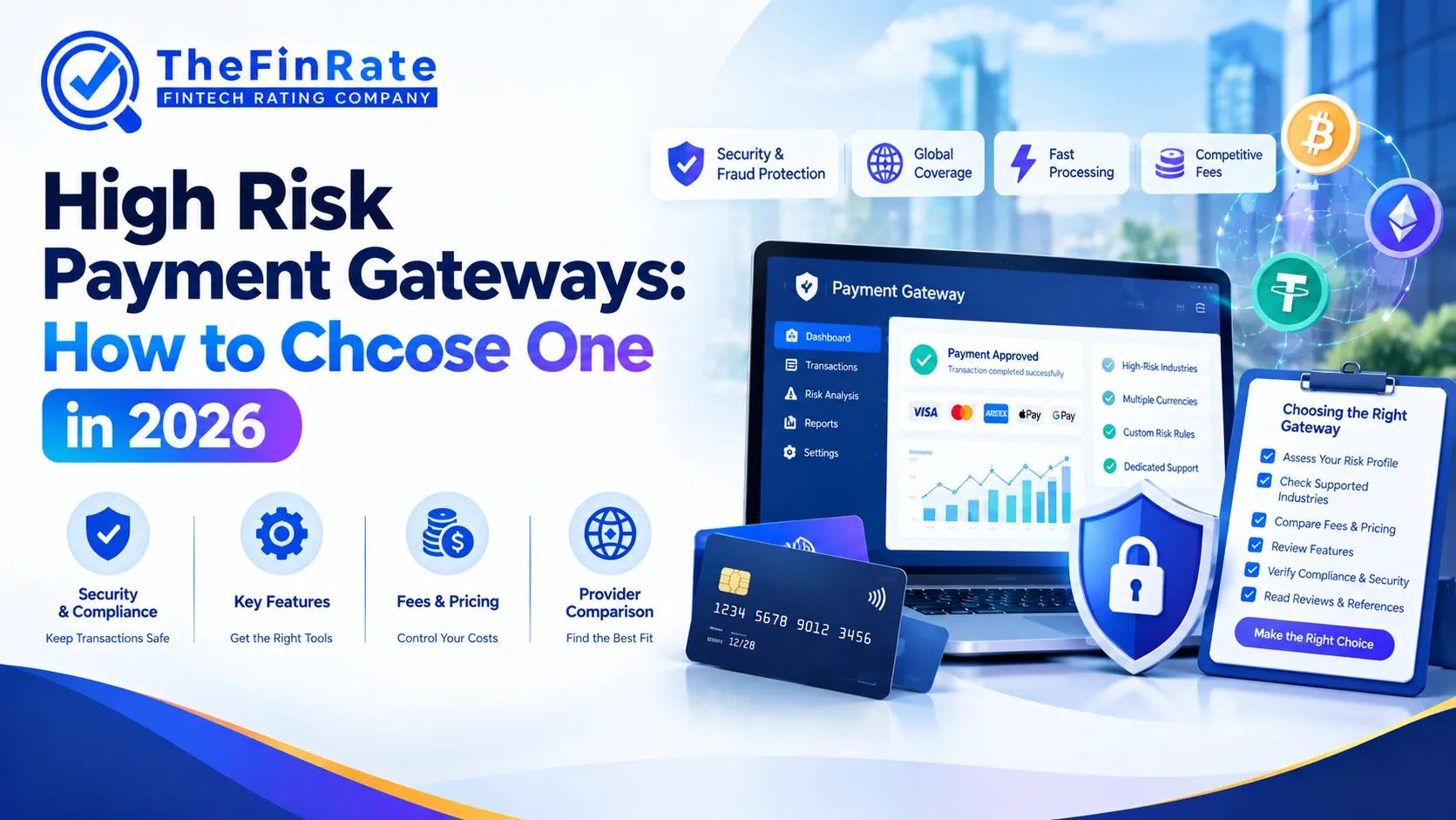
High Risk Payment Gateways: What Merchants Need to Know Before They Apply
Few things disrupt an online business faster than a frozen payment account. Merchants in sectors such as subscriptions, travel, gaming, nutraceuticals and international eCommerce often find that mainstream processors approve them quietly, then terminate them when chargebacks climb. High risk payment gateways exist to solve that problem. This article explains what they are, what separates good providers from poor ones, and how to avoid the mistakes that cost merchants their processing.
What Is a High Risk Payment Gateway?
A payment gateway securely passes card and alternative payment data from your checkout to the processor and the issuing bank. A high risk payment gateway does the same job, but it is paired with underwriting, fraud tools and acquiring relationships built for businesses that mainstream providers decline or restrict.
Unlike standard gateways from providers such as Stripe or Square, these systems typically add advanced fraud tools, multi-currency routing and more flexible underwriting.
The "high risk" label describes the profile of the business, not its honesty. Banks and card networks look at factors such as:
Industry and merchant category code
Expected chargeback and refund rates
International sales volume
High average ticket sizes
Recurring billing or delayed delivery of goods and services
Which Businesses Are Usually Classified as High Risk?
Classification varies by provider, but common examples include online gaming and betting, forex, adult entertainment, CBD and nutraceuticals, travel, debt services and subscription businesses. If you want a quick look at the providers that serve these sectors, TheFinRate's overview of the top payment gateways for high-risk businesses is a useful starting point.
A business can also become high risk because of its own numbers. A merchant selling ordinary products can be reclassified after a spike in disputes or a sudden jump in volume.
Why Chargebacks Define the Category
Chargebacks are the main reason processors tighten or end relationships. Visa's current monitoring approach makes this concrete. Its VAMP program combines fraud reports and disputes into a single ratio, and from April 2026 the excessive-merchant threshold dropped from 2.2% to 1.5% for merchants in the US, Canada, the EU and Asia-Pacific. A merchant sitting at a 1.8% ratio, comfortable under the old rule, is now over the line.
There is a second pressure point. Acquirers are judged on their whole portfolio at much tighter levels than individual merchants. A merchant running close to the merchant threshold can still be managed out through limits, reserves or offboarding. Ask any provider for both the card network's thresholds and its own internal action levels.
How to Evaluate High Risk Payment Gateways
With dozens of providers claiming high-risk expertise, due diligence matters more than marketing. TheFinRate's high-risk payment gateway buyer's guide covers the full selection process in more depth. In short, use these criteria.
Underwriting Transparency
Ask which industries the provider accepts today, how long underwriting takes, and what documents it needs. A provider that cannot explain its decision process will be hard to work with later.
Account Stability and Reserves
Ask about rolling reserves, settlement timing and the conditions that trigger a hold. Reserves are common in this space, so the question is whether the terms are written down and predictable.
Fraud and Chargeback Tools
Look for AVS and CVV checks, velocity rules, 3D Secure and dispute alert integrations. Tools that stop disputes before they post are worth more than tools that only help you contest them afterward.
Pricing Structure
High-risk processing usually costs more than standard processing, because the provider carries more exposure. Compare per-transaction fees, monthly minimums, chargeback fees, setup costs and early termination penalties, and get everything in writing. For a wider view of how pricing varies across the segment, browse TheFinRate's resources on high-risk payment rates and fees.
Geographic and Payment Method Coverage
If you sell internationally, check which currencies, local payment methods and acquiring regions the gateway supports. Regional rules differ, and they affect both approval rates and compliance obligations. Merchants selling across borders can read TheFinRate's guide to finding the best international high-risk payment gateway before shortlisting providers.
Integration and Testing
Request a sandbox before you commit. It lets your developers confirm that checkout, webhooks and refunds work as expected before real customers are involved.
A Quick Comparison: Gateway Models
Model | Typical strength | Typical trade-off |
|---|---|---|
Specialist high-risk processors | Broad industry acceptance | Higher fees, reserves |
Offshore or international acquirers | Wider vertical and regional coverage | More compliance and tax review |
Payment service providers with risk tools | Fast onboarding, scalable | Can terminate if ratios rise |
Crypto payment gateways | Fewer card-network constraints | Volatility, regulatory variation |
Treat this as a framework rather than a ranking. The right fit depends on your vertical, volumes and risk tolerance, and you should confirm every provider's current terms directly.
Common Mistakes to Avoid
Misrepresenting your business model. Misdescribing what you sell or how you sell it is a fast route to termination.
Relying on a single processor. One outage, hold or termination can stop all revenue. Many merchants add a backup gateway before they need one.
Ignoring the numbers until there is a problem. Track your dispute and fraud ratio monthly, not after a warning letter arrives.
Skipping the contract details. Reserve percentages, hold periods and exit fees are where surprises hide.
Choosing on price alone. The cheapest quote often comes with the least stable terms.
Practical Recommendations
Document your business model, refund policy and fulfilment process before applying.
Gather several months of processing statements if you have them.
Apply to two or three providers rather than one, so you have leverage and a fallback.
Set internal alerts well below your acquirer's thresholds.
Make your billing descriptor recognisable and your cancellation process easy, since confused customers often file disputes instead of emailing support.
Review your setup every quarter, as network rules and provider policies change.
Conclusion
High risk payment gateways are not a workaround for bad practices. They are infrastructure for legitimate businesses that mainstream providers find hard to underwrite. The merchants who do best treat the relationship as long term: they are transparent in underwriting, watch their dispute ratios closely, and keep a backup option ready. To keep researching, explore TheFinRate's full collection of high-risk payment gateway resources and compare providers on stability and terms first, price second.