

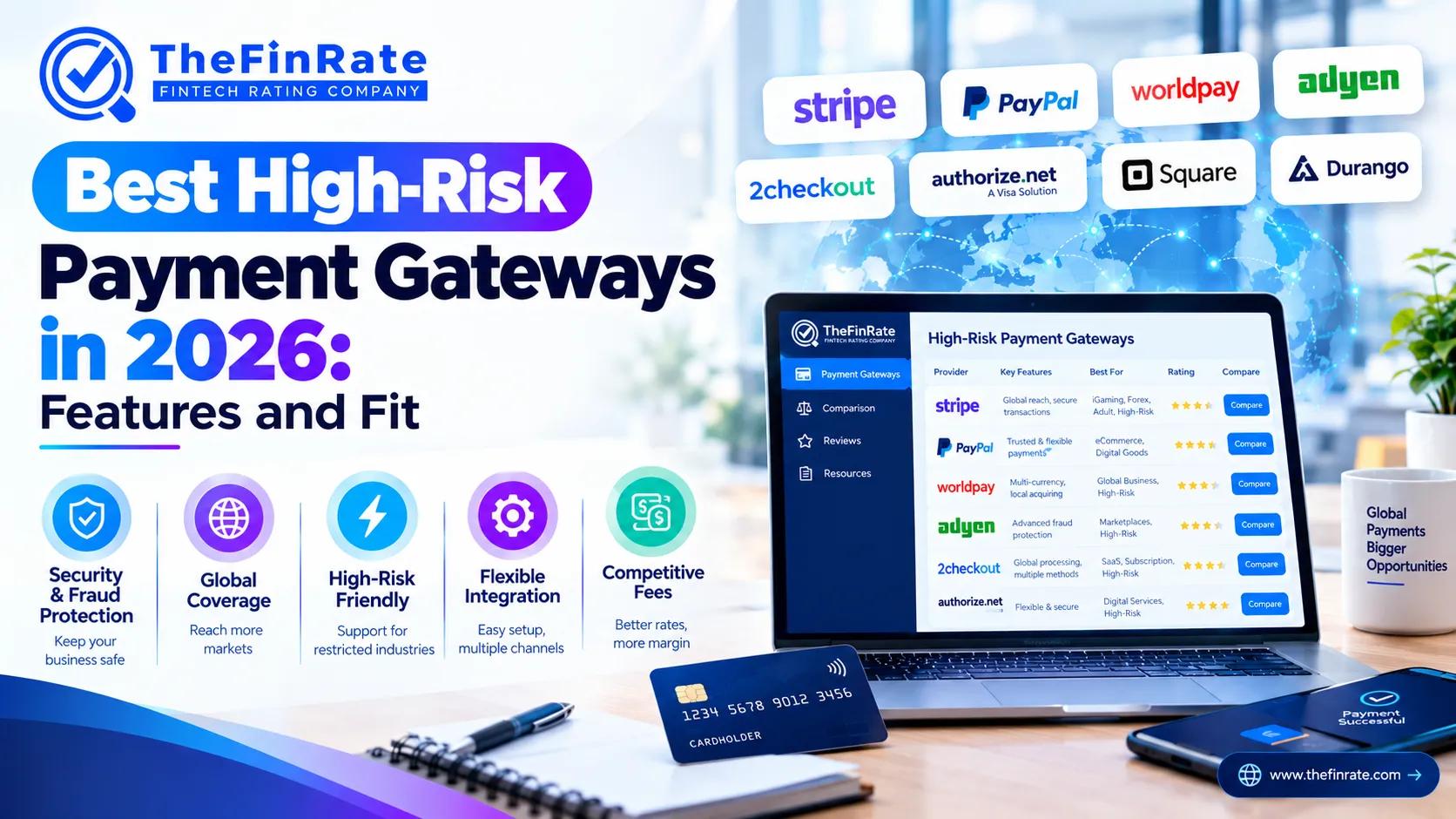
Most pages on this topic mix up three different things: the gateway, the processor and the merchant account. That makes provider lists misleading, because many "high-risk gateways" cannot approve you on their own. This guide separates the layers, shows which one each provider supplies, and helps you match a setup to your business. "Best" here means best fit against stated criteria, not a ranking. Details were last checked on 19 October 2026 and change often, so confirm them with each provider.
Key takeaways
A gateway moves payment data. A merchant account is what actually holds your approval and your funds. High-risk approval usually comes from the merchant account side.
A gateway that connects to many processors can reduce your dependence on one provider.
Industry acceptance differs by provider, so confirm your exact vertical before you apply.
Gateway vs merchant account vs processor: what changes?
Payment gateway: the software layer that captures card details at checkout, sends them for authorization and returns the result. It also handles features like tokenization, recurring billing and fraud tools.
Processor: the network connection that routes the transaction between the gateway, the card networks and the bank.
Merchant account: the account, sponsored by an acquiring bank, that receives your settled funds. Underwriting, reserves, contract terms and termination decisions happen here.
For high-risk merchants, this split matters because a gateway can be easy to get while the merchant account is the hard part. A common example is Authorize.net, which reviewers describe as a gateway only. You still need a separate merchant account from a provider willing to underwrite your business. For the account side, see our guide to high-risk merchant account providers.
Selection criteria by vertical and geography
Use these filters before you compare features:
Does the provider accept your exact vertical? "High-risk friendly" often means some industries, not all. Ask for the prohibited-business list in writing.
Which layers does it supply? Gateway only, merchant account only, or both.
Which processors can it connect to? More connections mean more room to switch or add a backup.
Where are your customers and your business located? Coverage differs by country and currency, and many solutions are US-focused. Verify before you commit.
Which chargeback tools are included? Look for alerts and dispute management, not only reporting.
How transparent is pricing? Expect quote-based pricing from most providers, and ask for a full cost breakdown.
Our high-risk payment gateway buyer's guide covers these criteria in more depth, including regional underwriting differences.
Provider overview: what each one supplies
Authorize.net
Supplies: gateway only. Reviewers consistently state it is not a merchant account, so high-risk merchants connect it to a merchant account from a separate high-risk provider. Merchants on Shopify forums report it integrates with Shopify checkout without redirecting customers, and that it is available in several regions, though country availability varies, so verify it for yours.
Fit: merchants who already have, or are getting, a high-risk merchant account and want a widely supported gateway. Limitation: it does not solve approval.
NMI
Supplies: gateway and orchestration layer. It is described as processor-agnostic, with large numbers of processor integrations, support for managing multiple merchant IDs under one gateway, tokenization and recurring billing. It is not the acquirer, and reviewers note merchants typically still need a separate processor relationship. NMI is generally sold through partners, not directly to merchants, so pricing usually combines gateway fees, processor fees and partner markup.
Fit: merchants who want a backup processor or multi-MID setup, for example to spread risk across more than one account. Limitation: total cost is hard to assess without a quote, and you still need underwriting through a partner.
Durango Merchant Services
Supplies: high-risk merchant accounts plus its own gateway, called Durango Pay, and support for connecting third-party gateways such as Authorize.net and NMI. Reviewers report international accounts with multicurrency support and offshore options for some high-risk industries. Rolling reserves may apply, and pricing is quote-based.
Fit: merchants who want the account and gateway handled together, or who need international options.
Limitation: you cannot compare cost before applying.
CCBill
Supplies: gateway and merchant services combined. It describes a PSP model, where merchants process under its master merchant account, and an ISO model, where merchants get their own account. Reviewers associate it mainly with adult and subscription businesses and report a rolling reserve and a payout hold after cancellation. Reported fee figures conflict across sources, so check its current pricing page.
Fit: adult and subscription merchants who want an all-in-one setup.
Limitation: higher costs and a reserve are likely.
PaymentCloud
Supplies: merchant accounts, not a gateway of its own. It states it can integrate its accounts with gateways such as Authorize.net, and it covers NMI in its own guidance. It does not offer offshore accounts and does not disclose rates. It also says it cannot guarantee approval for applicants with credit challenges.
Fit: US merchants who want a domestic account and will choose their own gateway.
Limitation: no public pricing and no gateway of its own.
Stripe (mainstream comparison)
Supplies: a combined payments platform, not a high-risk specialist. Stripe publishes a prohibited and restricted businesses list. Prohibited industries cannot use it, and restricted ones need additional due diligence. Its support pages say some listed businesses may be supported with explicit prior approval, so check the current list for your exact business.
Fit: low-risk and some moderate-risk businesses.
Limitation: many high-risk verticals are excluded or reviewed case by case, and accounts can be restricted later.
Shortlist by use case
These matches rest on how providers describe themselves and on reviewer reports. They are starting points, not recommendations.
Adult or subscription merchant who wants one provider: CCBill describes this focus.
Merchant who wants a backup route or several merchant IDs: NMI is built around multi-processor connectivity.
International or offshore needs: Durango reports these options. Confirm country coverage directly.
US merchant who wants a domestic dedicated account and a familiar gateway: PaymentCloud paired with a gateway such as Authorize.net.
Shopify or similar platform merchant: confirm the gateway you choose is supported by your platform, and ask your merchant account provider to connect it.
Integration and routing considerations
Use a processor-agnostic gateway where possible. It lets you add or switch processors without rebuilding checkout.
Plan a backup before you need one. If one account is frozen or terminated, a second merchant ID connected to the same gateway can keep sales moving. Our article on single-processor dependency risk goes deeper on this.
Test before you commit. Ask for a sandbox and test your checkout, refunds and recurring billing.
Check platform compatibility. Confirm your cart or billing software supports the gateway and your merchant account together.
Keep volume balanced. Splitting traffic across accounts must follow each provider's terms. Ask whether routing rules are allowed.
Questions to ask about declines, refunds and settlement
Which decline codes will I see, and can I see them in real time?
How do refunds work, and what do they cost?
Is a retry or smart-routing feature available for failed recurring payments?
What is the settlement schedule, and what can change it?
What triggers a payout hold, and how long can it last?
Which chargeback alert and dispute tools are included, and which cost extra?
What happens to my funds and tokens if I leave?
FAQs
Can a high-risk business use a mainstream gateway? Sometimes, but many mainstream providers publish prohibited and restricted business lists. Some businesses can be supported with prior approval. Others are excluded. Even when approved, accounts can be reviewed or restricted later, so read the current list for your exact business.
Do I need a merchant account if I use a gateway? Usually yes. A standalone gateway does not hold your approval or funds. Combined platforms handle this under their own master account, which changes the risk and control trade-offs.
Can I use more than one gateway? Often yes, and some merchants do this for redundancy. Check each provider's terms, and make sure your platform supports it.
Why do high-risk payments decline more often? Common causes include issuer risk rules, mismatched billing data, high-ticket sales and prior chargebacks. Decline-code visibility and retry tools help you diagnose the cause.
How long does approval take? It depends on your documents, industry and history. Treat any quoted timeline as an estimate, not a promise.
Verdict
No gateway is best for every merchant. The right choice depends on your vertical, where you sell, and whether you need approval, routing flexibility or both. Start by deciding which layer you are missing, then compare providers that supply it.
Compare gateways by business type, region and payment requirements in TheFinRate's payment gateway reviews, and review each provider's requirements before requesting a quote.